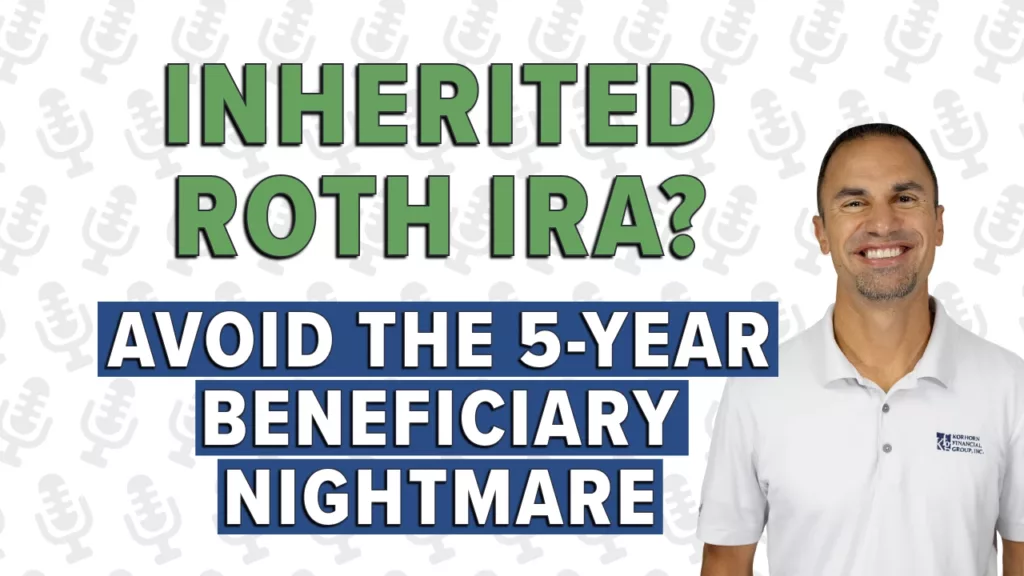

Think you have 10 years to empty an inherited Roth IRA? That may not always be the case. In this episode of Wise Money, we break down the lesser-known 5-year rule, how beneficiary designations can change your options, and why regularly reviewing them matters. Plus, we answer listener questions about saving for a first home, Mega Backdoor Roth contributions, and Roth IRA 5-year rules.
Season 11, Episode 52
Download our FREE 5-Factor Retirement guide
Read our blog!
Listen on Podcast
Subscribe on YouTube
This information is for general financial education and is not intended to provide specific investment advice or recommendations. All investing and investment strategies involve risk, including the potential loss of principal. Asset allocation & diversification do not ensure a profit or prevent a loss in a declining market. Past performance is not a guarantee of future results. This video may discuss estate planning concepts but does not constitute legal advice. Please consult an attorney for advice specific to your situation.
Beneficiary Audits: The Simple Review That Can Prevent Costly Estate Planning Mistakes
You can have a well-designed estate plan, carefully managed retirement accounts, and a clear idea of who should inherit your assets. But if the beneficiary designations on your accounts don’t match those intentions, your financial plan may not work the way you expect.
That’s why regularly completing a beneficiary audit is an important part of financial planning. A beneficiary audit is simply a review of the people or entities listed to receive your assets when you die. It can help identify outdated information, missing beneficiaries, and other issues before they create problems for your family.
Beneficiary designations can be particularly important with retirement accounts. In some situations, something as simple as failing to name a beneficiary could change the rules that apply to an inherited Roth IRA or traditional IRA.
What Is a Beneficiary Audit?
A beneficiary audit is a review of the beneficiary designations across your financial accounts and insurance policies. The goal is to confirm that the people listed are still the people you intend to receive those assets.
Depending on your financial situation, an audit could include reviewing beneficiaries on:
- 401(k), 403(b), and other workplace retirement plans
- Traditional and Roth IRAs
- Life insurance policies
- Annuities
- Health savings accounts (HSAs)
- Transfer-on-death (TOD) accounts
- Payable-on-death (POD) bank accounts
You should review both primary and contingent beneficiaries. A primary beneficiary is generally first in line to receive the asset. A contingent beneficiary typically inherits if the primary beneficiary is unable to do so.
Leaving off a contingent beneficiary can create problems if your primary beneficiary dies before you and you never update the account.
Your Beneficiary Designation Can Override Your Will
One of the biggest misconceptions about estate planning is that your will determines who receives everything you own.
Many financial accounts pass according to their beneficiary designation rather than the instructions in a will. If your retirement account lists your sibling as beneficiary but your will says you want the account to go to your child, the beneficiary designation may control where those assets go.
This is why updating your will isn’t necessarily enough after a major life change. Your estate planning documents and beneficiary designations need to work together.
Why Beneficiaries Matter for an Inherited Roth IRA
Beneficiary designations can also affect what happens after someone inherits a retirement account.
The SECURE Act significantly changed the rules for many inherited retirement accounts. For many non-spouse designated beneficiaries, an inherited retirement account is generally subject to a 10-year distribution period, although different rules and exceptions can apply depending on the beneficiary and the original account owner.
But what happens when no individual is properly designated as the beneficiary?
If an estate becomes the beneficiary of a Roth IRA because no beneficiary was named, different distribution rules may apply. In certain situations, the account may be subject to a five-year rule rather than the 10-year rule that can apply to a designated beneficiary.
That distinction can be especially important with an inherited Roth IRA. Roth IRAs offer the potential for tax-free growth, so losing additional years of tax-free growth could have a meaningful impact on the amount ultimately available to the beneficiary.
The specific rules for inherited retirement accounts can be complicated, so it’s important to review the circumstances of an inheritance with your financial and tax professionals.
When Should You Review Your Beneficiaries?
There isn’t one review schedule that’s right for everyone, but checking your beneficiary designations every year or two can help prevent them from becoming outdated.
You should also consider conducting a beneficiary audit after a significant life event, including:
- Marriage or divorce
- Birth or adoption of a child
- Death of a beneficiary
- Remarriage
- Children reaching adulthood
- Opening or rolling over a retirement account
- Changing employers
- Significant changes to your estate plan
Don’t assume that beneficiaries automatically transfer when you move money from one financial institution or retirement plan to another. Whenever you open a new account or complete a rollover, verify the beneficiary information.
Don’t Forget Your Old 401(k)
Workplace retirement accounts can be especially easy to overlook.
Maybe you named your parents when you started your first job at 23. Years later, you’re married with children but never changed the designation. Or perhaps you changed employers several times and now have retirement accounts at multiple institutions.
A beneficiary audit forces you to locate those accounts and verify what’s actually on file rather than relying on your memory.
It’s also important to review your current workplace plan. Logging into your 401(k) and confirming both the primary and contingent beneficiaries may only take a few minutes, but it can prevent significant complications later.
Make Beneficiary Reviews Part of Your Financial Plan
Beneficiary planning isn’t something you should complete once and forget about. Your family changes, your financial accounts change, tax laws change, and your wishes may change along the way.
Create a regular rhythm for reviewing your beneficiary designations alongside your broader estate and financial plan. Confirm who is listed, make sure contingent beneficiaries are included, and consider whether those designations still coordinate with your will or trust.
A beneficiary audit may seem like a small administrative task, but the consequences of getting it wrong can be significant. Whether you’re trying to simplify the transfer of your assets or preserve planning opportunities for an inherited Roth IRA, keeping your beneficiary designations current can help ensure your financial plan continues working the way you intended.